
Knowledge Library → Ram Dass
Translated excerptsRam Dass is a deeply significant teacher in my life. He has accompanied me for many years, through countless talks and thousands of hours of listening, and he is an inseparable part of who I am today. I love him deeply, and I hold him — and his guru, who became mine as well, Maharaj-ji — in endless appreciation.
These are moments I especially loved, and chose to translate into Hebrew so that people who don't follow English easily could step inside them too.
"The art of life is to stay wide open and be vulnerable, yet at the same time to sit with the mystery and the awe and with the unbearable pain — to just be with it all."
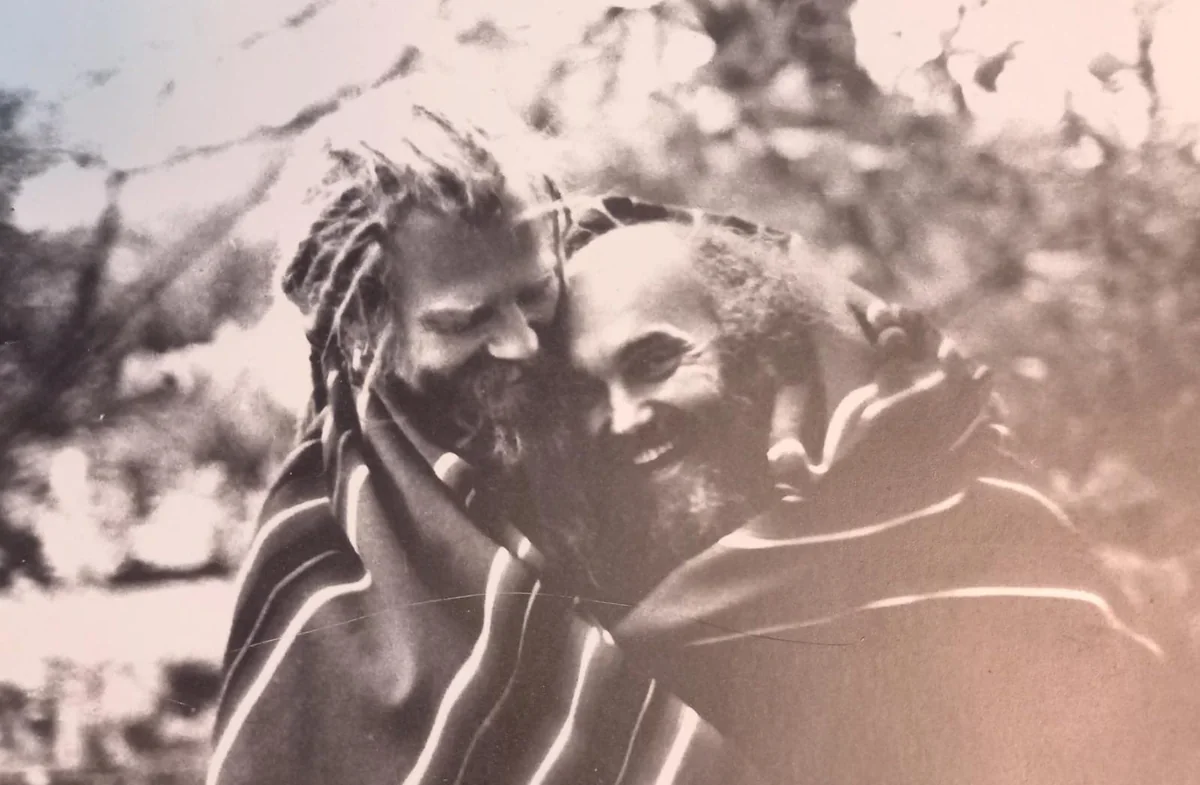
"If you feel a sense of social responsibility, first of all keep working on yourself. Being peaceful yourself is the first step if you want to live in a peaceful universe."
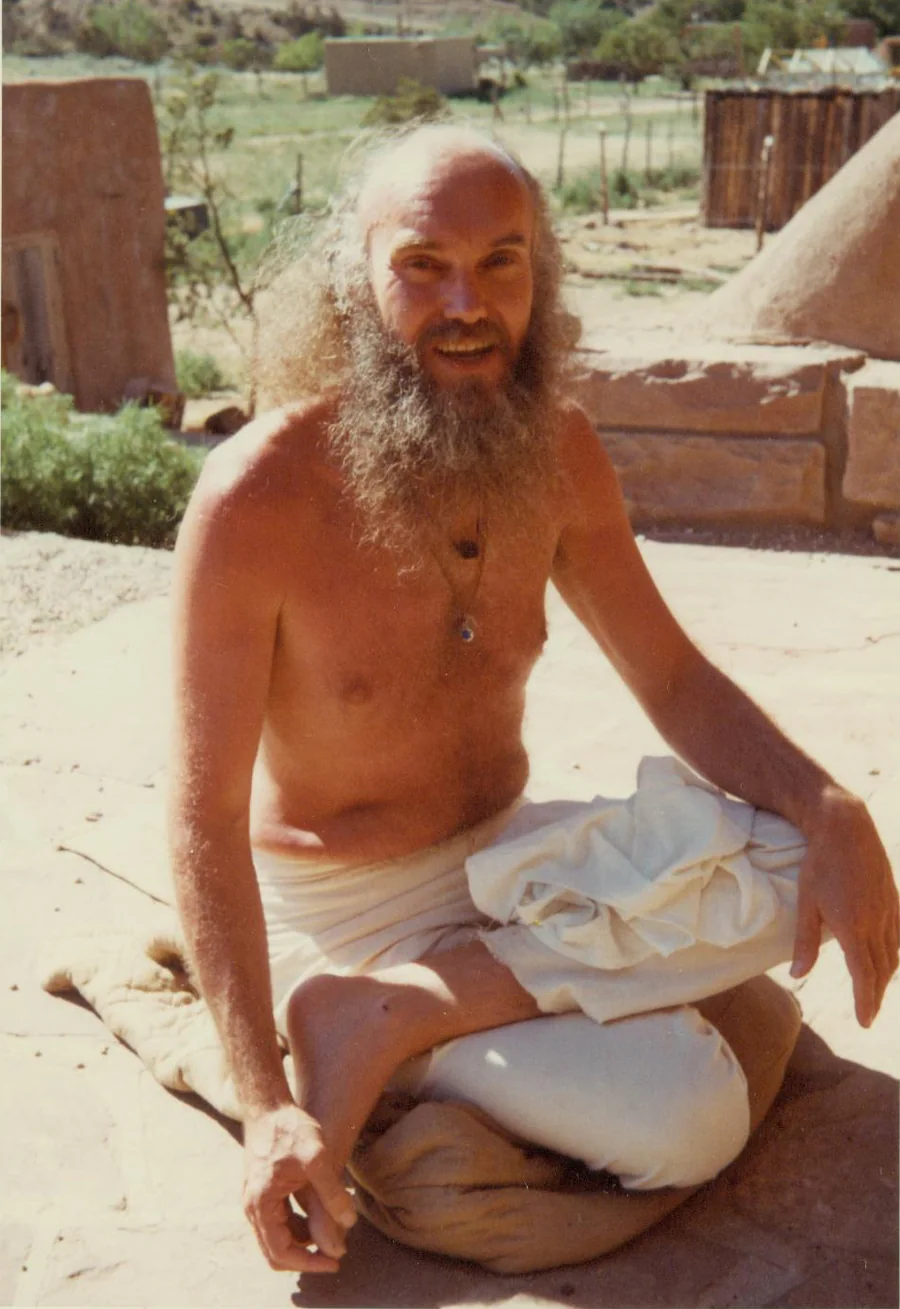
Richard Alpert (1931–2019) was a clinical psychologist and a lecturer at Harvard University. He earned his doctorate at Stanford, with a thesis on achievement anxiety.
In the early 1960s he joined Timothy Leary in research on psychedelics, chiefly psilocybin. The research caused an uproar, and in 1963 Harvard dismissed him. He was the only one formally fired — Leary's contract had simply run out.
In 1967 he travelled to India, carrying a question that gave him no rest: psychedelics, LSD above all, had opened a door — so why did it always close again? Why did the experience pass? He found no answer anywhere, until he met Neem Karoli Baba in the Himalayas, the teacher he called Maharaj-ji.
The story goes that Maharaj-ji asked for "the medicine" and swallowed 915 micrograms — nine times a normal dose. Nothing happened. He said the same place could be reached through meditation, and that he was always there anyway.
Maharaj-ji gave him the name Ram Dass, "servant of God." In 1971 he published Be Here Now, which became one of the most influential books of the century.
"Contentment is just being complete in the moment. Not a feeling of accomplishment from doing something — an attitude of the soul."
Neem Karoli Baba — whom his students simply called Maharaj-ji — was born Lakshman Narayan Sharma in the village of Akbarpur in northern India, around 1900. He was a devotee of the Hindu god Hanuman, who takes the form of a monkey, and more than a hundred temples were eventually built in his name. In 1964 the ashram at Kainchi was built in the Himalayan foothills, and there he spent the last decade of his life. He died on 11 September 1973 in Vrindavan.
His students describe a teacher who taught no method and built no system. People came, sat beside him, and received — sometimes a sentence, sometimes only a glance. Through the 1960s and 70s a whole company of Westerners gathered around him; alongside Ram Dass there were Bhagavan Das, Krishna Das and Larry Brilliant.
For Ram Dass he was the answer to the question he had arrived with. Not an explanation — a presence.
"Love everyone, feed everyone, tell the truth."
A short intro call, no commitment — let's see whether it's a fit.
Schedule an intro call